
The short answer
You likely need a new furnace if repairs are piling up, rooms heat unevenly, bills keep rising, or a technician finds a safety problem like a cracked heat exchanger. We inspect your full system first, explain whether repair, a new gas furnace, or a heat pump fits your home, and give you a written quote before any work begins.
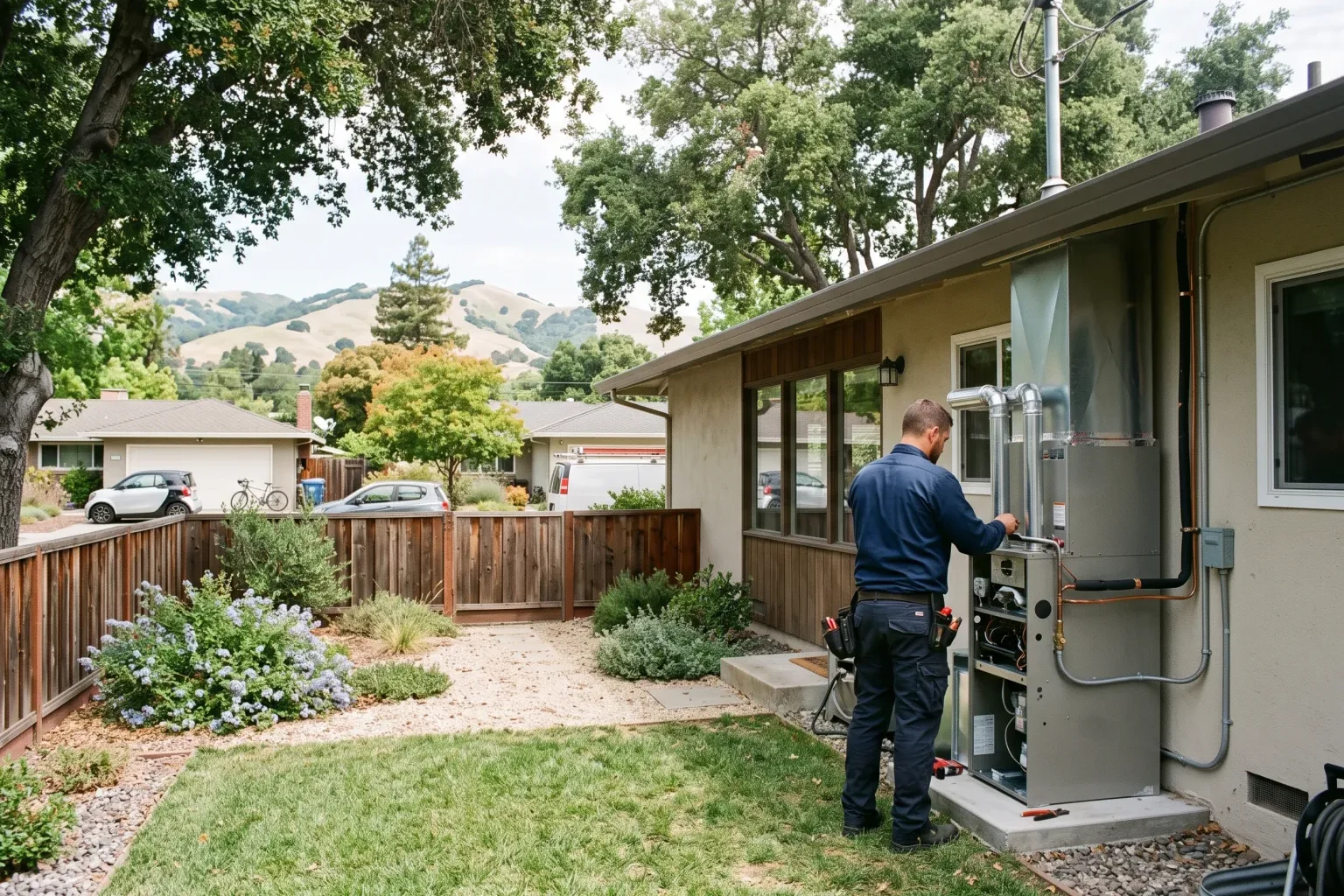
If your furnace is struggling through Palo Alto's damp winter nights, or you're planning ahead before it quits, this page explains how we approach furnace installation. PrecisionFix HVAC Repair Service installs and replaces gas furnaces for homeowners in Palo Alto and nearby cities. We also help you decide whether a heat pump makes more sense for your house. Below, we cover the signs that a replacement is coming, what we inspect before we recommend anything, how repair compares with replacement, what drives the cost, and what to expect on installation day.
Signs It's Time for a New Furnace
Furnaces rarely fail without warning. In the Santa Clara Valley, winters are mild but damp, so a furnace may run less than one in a colder region. That means problems can stay hidden until the first chilly week of the season. These are the signs we tell homeowners to watch for:
One of these signs on its own doesn't mean you need a new furnace. Several together, especially on an older unit, are a good reason to get an evaluation before the system fails on a cold night.
- Repairs are becoming frequent, and the same parts keep failing.
- Some rooms stay cold while others overheat, even after filter changes and vent adjustments.
- Your heating bills are climbing without a change in how you use the system.
- The burner flame looks yellow or flickers instead of burning a steady blue.
- You hear banging, squealing, or rattling at startup or shutdown.
- You notice more dust, dry air, or stuffiness when the heat is running.
- The furnace short-cycles, turning on and off every few minutes.
- A technician has found a cracked heat exchanger or another safety issue.
What We Check Before Recommending Installation
A good installation starts with an honest look at the whole system, not just the furnace in the closet or attic. Before we recommend replacing anything, our technician inspects the following:
Sizing deserves special attention. A furnace that's too large heats quickly, shuts off, and starts again, which wastes fuel and wears out parts. One that's too small runs constantly on cold nights. We size new equipment for your house as it is today, not to match whatever was installed before.
- The current furnace's condition, including the heat exchanger, burners, ignition, blower motor, and controls.
- Venting and flue pipes, checking for corrosion, poor slope, or blockages that affect safe exhaust.
- Gas supply lines and connections, checking for leaks and proper sizing.
- Ductwork, looking for leaks, crushed runs, poor insulation, and undersized returns that limit airflow.
- Your home's size, insulation, windows, and layout, so the new equipment matches the actual heating load.
- Thermostat placement and compatibility.
- Electrical service, which matters if you're considering a heat pump instead of a gas furnace.
- Combustion safety and carbon monoxide risks around the existing equipment.
Repair, Replace, or Switch to a Heat Pump
If the problem is a failed igniter, flame sensor, or blower motor on an otherwise sound furnace, repair is usually the sensible choice. Replacement makes more sense when the heat exchanger is cracked, repairs keep stacking up, parts are hard to find, or the unit no longer heats your home evenly. We'll explain what we found. When both repair and replacement are reasonable, we'll give you both options.
Bay Area rules also factor in. Under the Bay Area Air District's Rule 9-4, natural gas furnaces manufactured from 2029 onward must meet a zero-NOx emission standard. In practice, that points homeowners toward heat pumps when a furnace is replaced after that date. The rules do not require you to replace working equipment. They apply only when an existing furnace fails or is replaced.
That gives you room to plan. If your furnace is working, you can keep maintaining and repairing it. If you're replacing it now, you can install a new gas furnace or consider a heat pump. A heat pump provides both heating and cooling, which can be useful in the hotter inland parts of the valley. We'll lay out the tradeoffs for your house without pushing either choice.
What Affects the Cost of a New Furnace
We don't quote installation prices sight unseen, because every home is different. These are the main factors that shape the cost of a new furnace:
Tax credits and incentives have also changed. The federal Energy Efficient Home Improvement Credit (25C) covered only qualifying heat pumps placed in service before December 31, 2025, so it isn't available for new installations now. Bay Area homeowners can still check BayREN and their local clean energy provider for current heat pump and electrification incentives. Amounts and availability change by funding cycle, so we confirm the current offer before including it in a quote.
- Equipment type and efficiency, such as a single-stage, two-stage, or variable-speed furnace, or a heat pump system.
- Capacity, based on your home's heating load.
- Where the unit sits, since attic, crawlspace, and tight closet installations take more labor.
- Venting changes, especially when moving to a high-efficiency furnace that needs new vent piping.
- Ductwork repairs, sealing, or modifications.
- Gas line or electrical upgrades.
- Permits and inspections required by your city.
- Removal and disposal of the old equipment.
- Add-ons such as a new thermostat, air filtration, or humidification.
How a Furnace Installation Visit Works
Here's what to expect from your first call to a finished installation:
Straightforward replacements of a similar system often take about a day. Projects with duct, venting, or electrical changes can take longer, and we'll tell you up front if yours is one of them. If your furnace fails outright, we offer 24/7 emergency service and can help keep your home safe while you decide on next steps.
- Assessment: A technician visits, inspects your current system and home, and asks about comfort problems and goals.
- Options: We explain what we found and give you a written quote with clear choices, including repair when it's a reasonable option.
- Scheduling and permits: We set an installation date and handle the permit process your city requires.
- Installation: Our crew protects floors and work areas, removes the old unit, installs the new equipment, and connects the gas, venting, electrical, and ductwork.
- Testing: Before we leave, we check gas pressure, combustion, airflow, temperature rise, and safety controls.
- Walkthrough: We show you how to use the thermostat, change the filter, and spot early warning signs.