
The short answer
Duct cleaning makes sense when there's visible debris, mold, pest activity, or renovation dust in your ducts, not on a fixed calendar schedule. We inspect first, clean only when it's warranted, and point out leaks, damaged sections, or airflow problems that cleaning alone won't fix.
Your heating and cooling system pushes air through the same ductwork every time it runs. Over time, those ducts can collect dust, construction debris, pet hair, and sometimes pests or moisture. PrecisionFix HVAC Repair Service cleans and inspects residential ductwork for homeowners in Palo Alto and nearby communities. We don't treat duct cleaning as an automatic add-on. Many homes don't need it often, and some don't need it at all. Our job is to tell you whether your ducts actually need cleaning, whether something else is causing the problem you're noticing, and what your options are if the ducts are damaged, leaking, or worn out.
Signs Your Ducts May Need Cleaning
Some dust inside ductwork is normal and isn't necessarily a problem. What matters is whether the contents of your ducts are affecting your indoor air, your equipment, or your comfort. These are the signs that usually justify a closer look.
Local conditions play a part too. The Santa Clara Valley has dry summers, so fine dust is easily pulled into return vents. Winters are mild and damp, which can lead to condensation in ducts that run through crawlspaces or unconditioned attics. Each can leave different traces in your ductwork.
- Dust or debris puffs out of supply registers when the system starts
- Registers and nearby surfaces get dusty again soon after you clean them
- Signs of rodents or insects, such as droppings, nesting material, or odors near vents
- A musty smell when the heat or air conditioning runs, or visible mold on registers or duct surfaces
- A recent remodel, drywall work, or floor sanding done while the system was running
- You moved into a home with an unknown maintenance history, or previous owners had pets or smoked indoors
- Rooms with weak or uneven airflow, which can point to leaks or disconnected ducts rather than dirt
What We Check During a Duct Inspection
Before recommending cleaning, we look at the whole air path, not just the vents you can see. We take photos as we go so you can see what we see, especially in attics and crawlspaces you may not want to climb into yourself.
If we find mold or moisture, we'll show you where it is and talk about the likely cause. Cleaning removes buildup, but it won't stop a moisture problem from coming back unless the source is addressed.
- Supply registers and return grilles throughout the house
- The return plenum, filter slot, and whether the filter fits without letting air bypass it
- Accessible duct runs in the attic, crawlspace, or garage
- Joints and connections, including old tape that has dried out or let go
- Insulation on ducts that run through unconditioned spaces
- Flexible duct for kinks, crushing, sagging, or tears
- The blower compartment and indoor coil for dust buildup that restricts airflow
- Signs of condensation, water staining, or pest entry points
Clean, Repair, or Replace: Your Options
Many homes only need cleaning. If the ducts are structurally sound, well connected, and properly insulated, a thorough cleaning and a fresh filter may be all that's needed.
Others need targeted repairs. Common fixes include sealing leaky joints with mastic, reconnecting runs that have come apart, replacing crushed or torn sections of flex duct, and re-insulating exposed sections. These repairs often do more for comfort and airflow than cleaning does.
Replacement makes sense when ductwork is deteriorated throughout. That includes brittle flex duct with crumbling insulation, widespread pest damage, mold in fiberglass duct board that can't be cleaned effectively, or a layout that was undersized or poorly designed from the start. In those cases, we'll explain whether replacing some or all of the system is the better use of your money.
If you're also planning to replace your furnace, it's a good time to evaluate the ducts. Under Bay Area Air District rules, natural gas furnaces manufactured from 2029 must meet a zero-NOx standard, which in practice points many homeowners toward heat pumps. Heat pumps depend on properly sized, well-sealed ductwork. Those rules don't require you to replace working equipment; they only apply when a furnace fails or is replaced. For incentives, Bay Area homeowners can check BayREN and their local clean energy provider. Offers change by funding cycle, so we confirm what's currently available before including it in a quote. The federal 25C tax credit for heat pumps is no longer available for installations after 2025.
What Affects the Cost of Duct Cleaning
Every home is different, so we give you a written estimate after we've inspected the system. Here are the main factors that shape the scope of the job.
- The size of your home and the number of supply and return vents
- How easy the ducts are to reach, such as tight attics, low crawlspaces, or ducts in finished ceilings
- The type of ductwork: sheet metal, flexible duct, or duct board
- How much debris there is and what kind, from ordinary dust to construction residue
- Whether mold, pest contamination, or moisture needs to be addressed
- Whether sealing, reconnecting, or replacing sections is added to the job
- Whether the blower and indoor coil are cleaned at the same time
- Homes with more than one HVAC system or zone
How a Duct Cleaning Visit Works
We keep the process straightforward and explain each step before we start. No work beyond the inspection happens without your approval.
If your heating or cooling stops working entirely, we also offer 24/7 emergency service, so you don't have to wait for a scheduled cleaning visit to get help.
- Scheduling: We ask about your concerns, the age of the home, and any recent work so we arrive prepared.
- Arrival and prep: We protect floors and furniture near the work area and shut off the system.
- Inspection: We check the ducts, connections, blower, and coil, and photograph what we find.
- Recommendation: We walk you through what we found and give you options in writing.
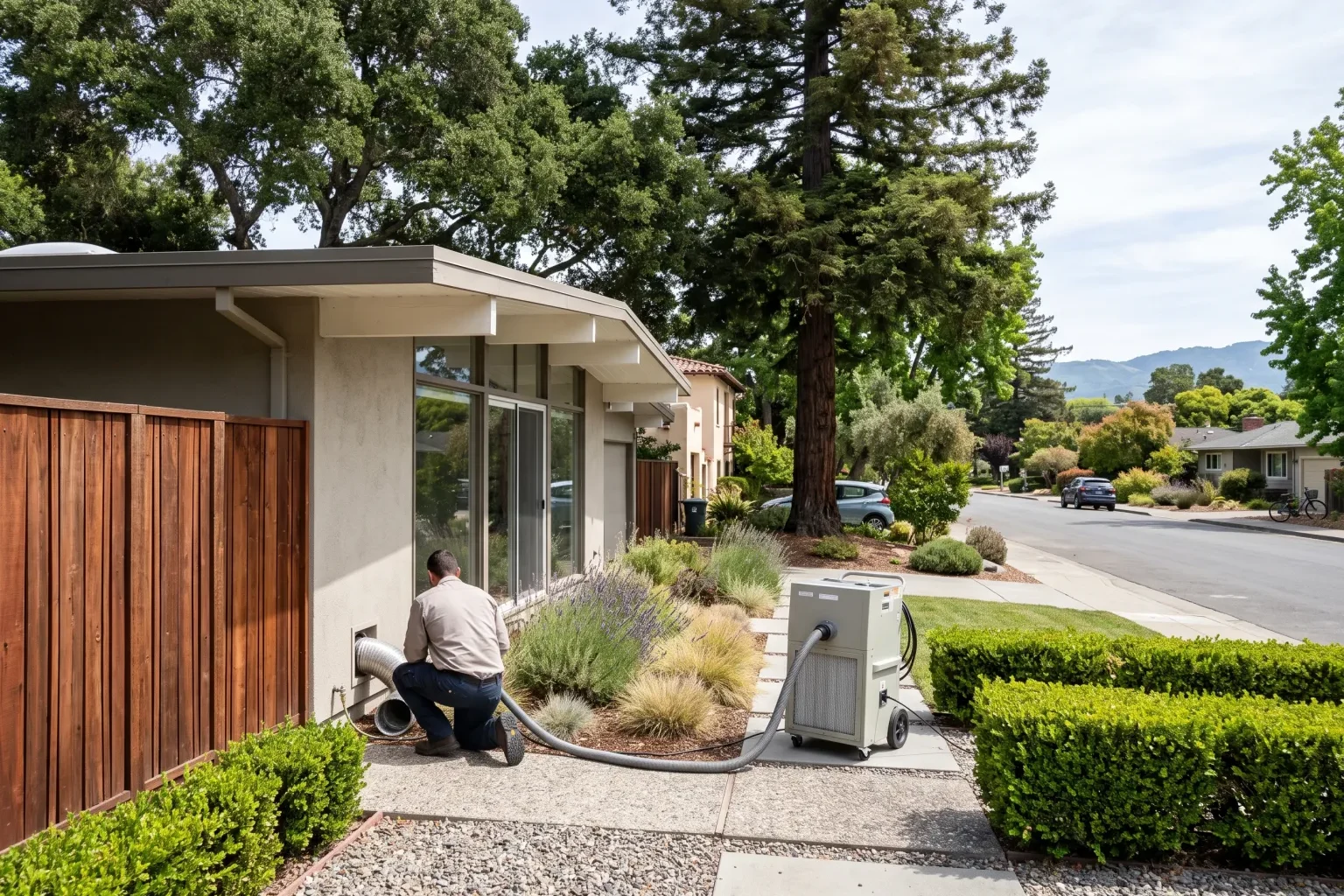
- Cleaning: We put the ducts under negative pressure with a filtered vacuum, then use brushes and air tools to loosen debris so it's pulled out instead of blown into your home.
- Wrap-up: We reinstall registers, install a new filter if needed, run the system to confirm airflow, and share before-and-after photos.